
Control
At present, there are no certified or licensed controls for jumping worms. We are exploring as many avenues in this field as possible, including: evaluating pesticides/biopesticides/soil management techniques already on the market for other organisms; exploring pesticides and soil management techniques inspired by the broader community; searching for new compounds/strategies. Finally, we continue to study jumping worm basic biology to try to find vulnerabilities in worms/cocoons.
We also provide support to regulatory agencies and industry to facilitate certification of pesticides for jumping worms and application of recommended horticultural management.
Representative projects:
Identifying Worm and Cocoon Controls
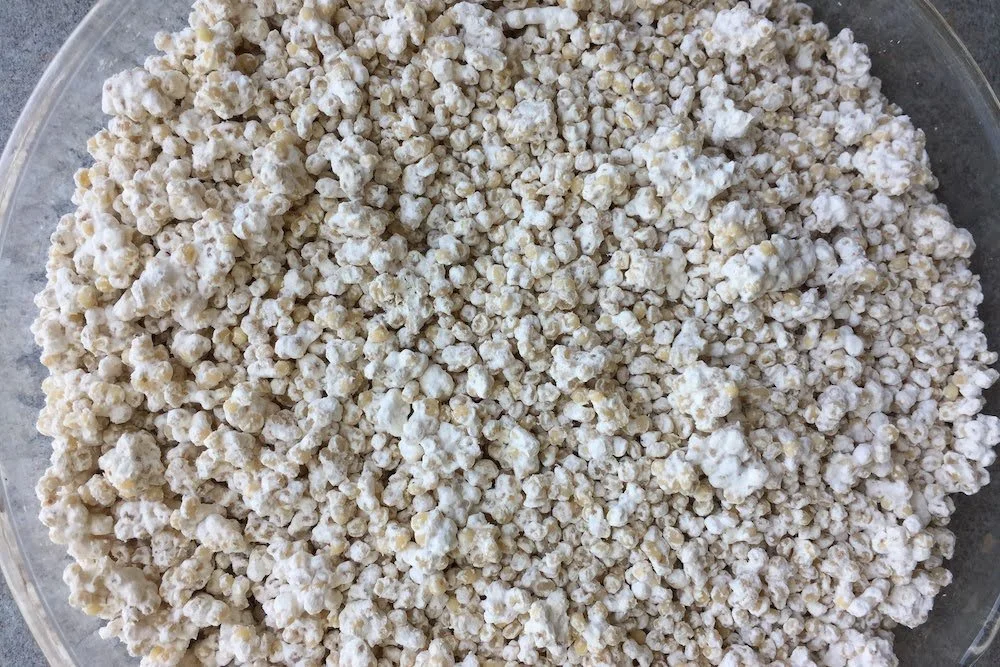
Photo credit Maryam Nouri-Aiin
In collaboration with our research partner Maryam Nouri-Aiin at the University of Vermont, who pioneered this work, we helped show that some naturally occurring soil fungi (e.g. Beauveria bassiana) are partially effective vermicides (worm pesticides). Our research currently focuses on replicating these results in different climates and settings, and exploring other potential chemical and physical interventions (e.g., heat), with the goal of obtaining pesticide registrations with commercial pesticide producers. These findings would likely be best implemented in controlled settings, like garden centers, nurseries, and contained gardens. In parallel, we are also exploring the biology and potential weaknesses of worm cocoons, which act as a “seed bank” for next year’s jumping worm population.
Participatory Science Worm Management Strategies
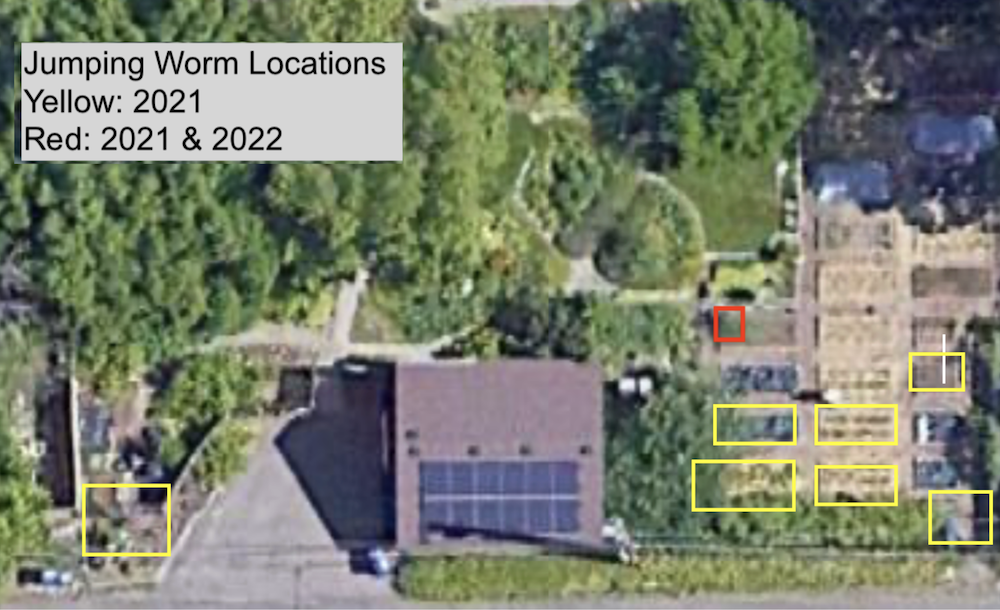
Photo by K. Randall, participant volunteer of study sites, courtesy of University of Minnesota
Our researchers have piloted studies out of the University of Minnesota extension to connect with volunteer community members to help evaluate and innovate possible jumping worm management strategies. The effects of this work produced significant and valuable data that we can begin to assess over broader geographic areas and environments. We are actively seeking volunteers throughout jumping worm affected regions, to expand these early findings and foster more creativity between researchers and communities.
Real-World Logistics
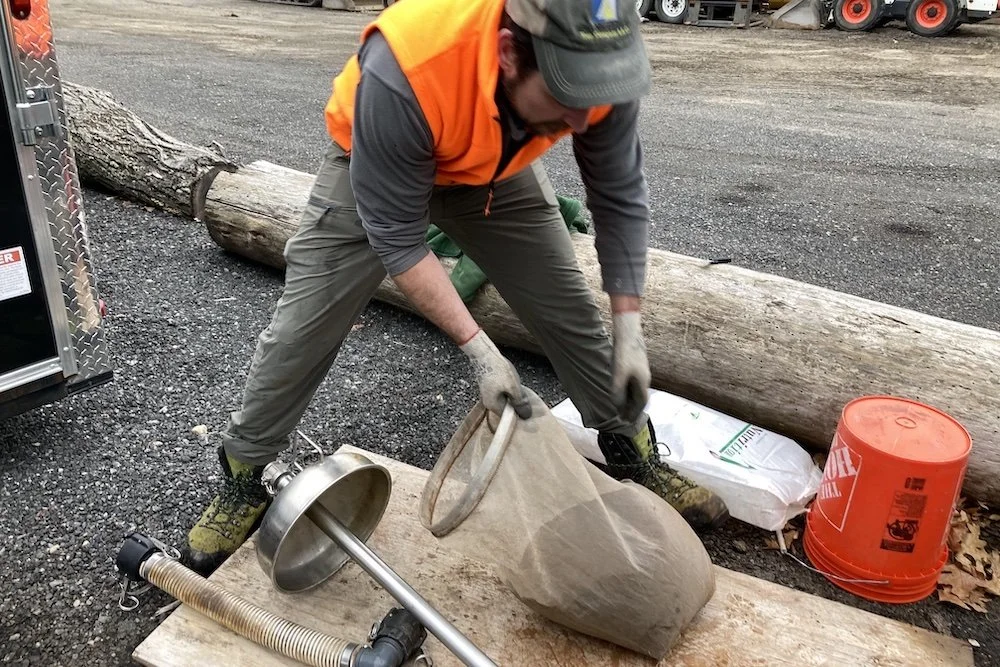
Our Massachusetts-based industry outreach team member, Bransfield Tree Company, is working with our science team and partners to pioneer the practicality of culturing and deploying fungal worm controls using common landscape equipment in real-world settings.
